Optimizing Laravel Eloquent Performance: Caching Strategies for Enterprise Applications
Laravel Eloquent is a powerful tool that offers unparalleled usability. It allows your team to build features faster and maintain code more easily. However, in an enterprise context, you must be disciplined.
Introduction:
In the world of modern web development, speed is not just a luxury—it’s a requirement. For enterprise-level applications handling thousands of concurrent users and millions of database rows, the difference between a 200ms response time and a 2s response time can mean the difference between a successful transaction and a lost customer.
At the heart of the Laravel framework lies Laravel Eloquent, an Object-Relational Mapper (ORM) that makes database interactions expressive and enjoyable. However, the very abstraction that makes Eloquent so usable can also lead to significant performance bottlenecks if not managed correctly. In this guide, we will explore how to master Laravel Eloquent and implement advanced caching strategies to ensure your enterprise application remains lightning-fast.
Understanding Laravel Eloquent and Its Usability
Before diving into optimization, we must understand what makes Laravel Eloquent the preferred choice for developers worldwide.
What is Eloquent?
Eloquent is an implementation of the Active Record pattern. Each database table has a corresponding "Model" that allows you to interact with that table. Instead of writing raw SQL, you use PHP syntax to create, read, update, and delete records.
The Usability Factor
The primary advantage of Laravel Eloquent is its usability. It allows developers to:
-
Read like Prose: Methods like
User::where('active', true)->get()are instantly understandable. -
Manage Relationships: Defining how a User belongs to a Team or has many Posts is handled through simple methods rather than complex JOIN statements.
-
Maintain Data Integrity: With features like Accessors, Mutators, and Casts, you can ensure data is formatted correctly every time it enters or leaves the model.
However, "usability" often hides "utility costs." Every time you call an Eloquent model, Laravel performs several tasks: instantiating a new object, hydrating that object with data, and managing state transitions. In an enterprise environment, doing this hundreds of times per request is a recipe for disaster.
The Silent Killer: The N+1 Query Problem
When working with Laravel Eloquent with relationships, the most common performance pitfall is the N+1 query problem.
Imagine you are displaying a list of 50 tasks and their assigned users. If you write:
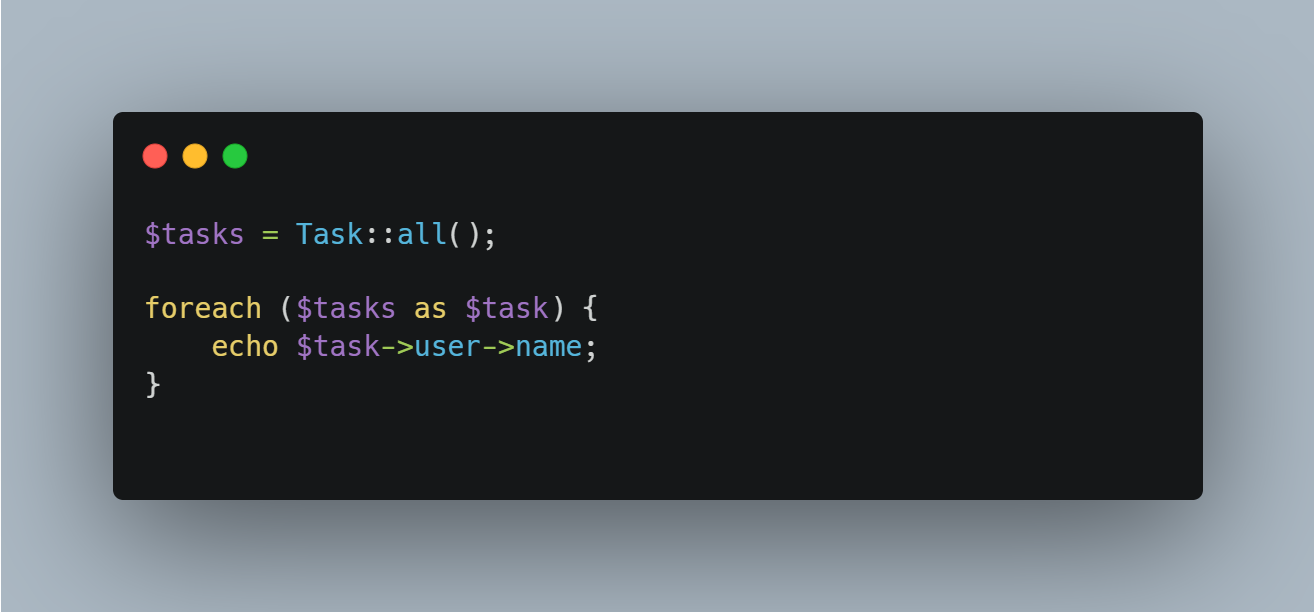
Laravel will execute 1 query to get all tasks, and then 50 separate queries to get the user for each individual task. This is the N+1 problem.
The Fix: Always use Laravel Eloquent with eager loading.
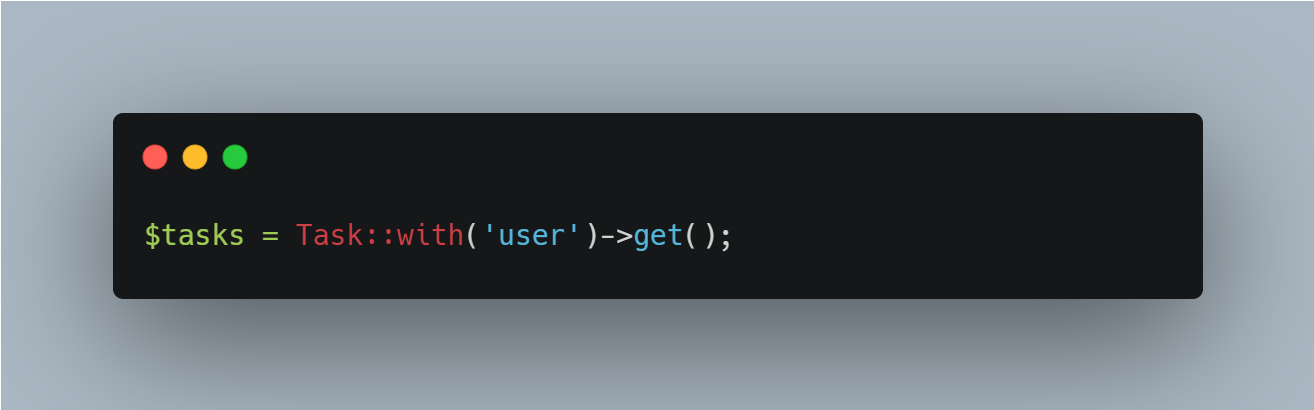
This reduces the workload to just 2 queries, regardless of whether you have 50 or 5,000 tasks. For enterprise applications, eager loading is not optional; it is a mandatory standard.
Caching Strategies for Enterprise Scalability
While query optimization is the first step, caching is the ultimate weapon for enterprise performance. Caching allows you to store the results of expensive database queries in a high-speed data store like Redis or Memcached.
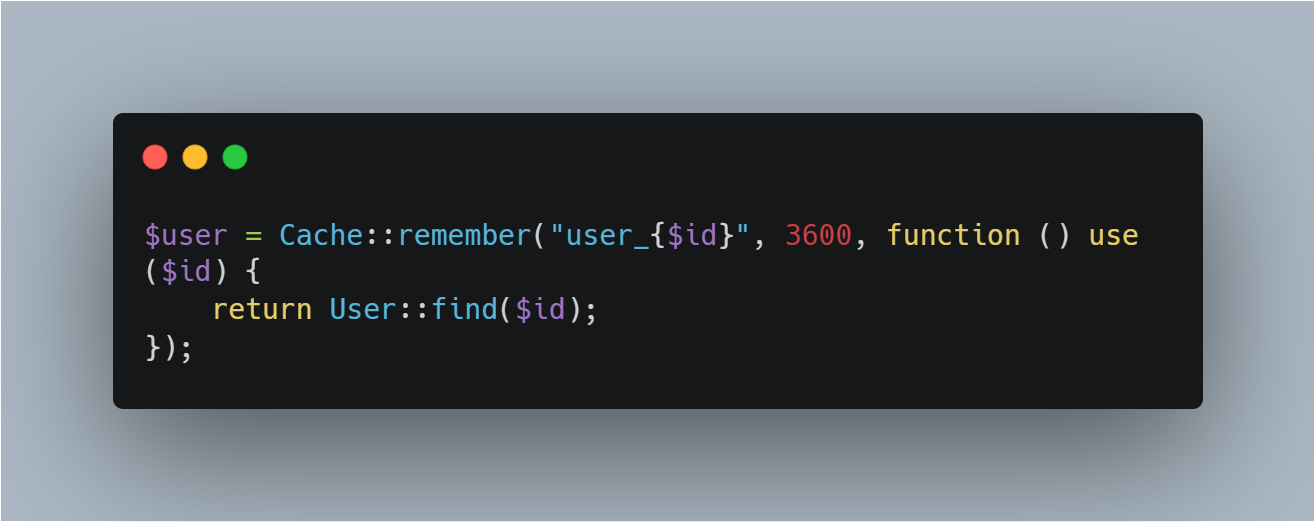
1. Individual Model Caching
For frequently accessed records—such as a user's profile or an organization's settings—caching the model instance can save thousands of database hits.
2. Caching Relationship Data
In enterprise apps, data is rarely flat. We often need to fetch a "Project" along with its "Members," "Files," and "Comments." Caching these complex trees using Laravel Eloquent with eager loading saves massive amounts of processing time.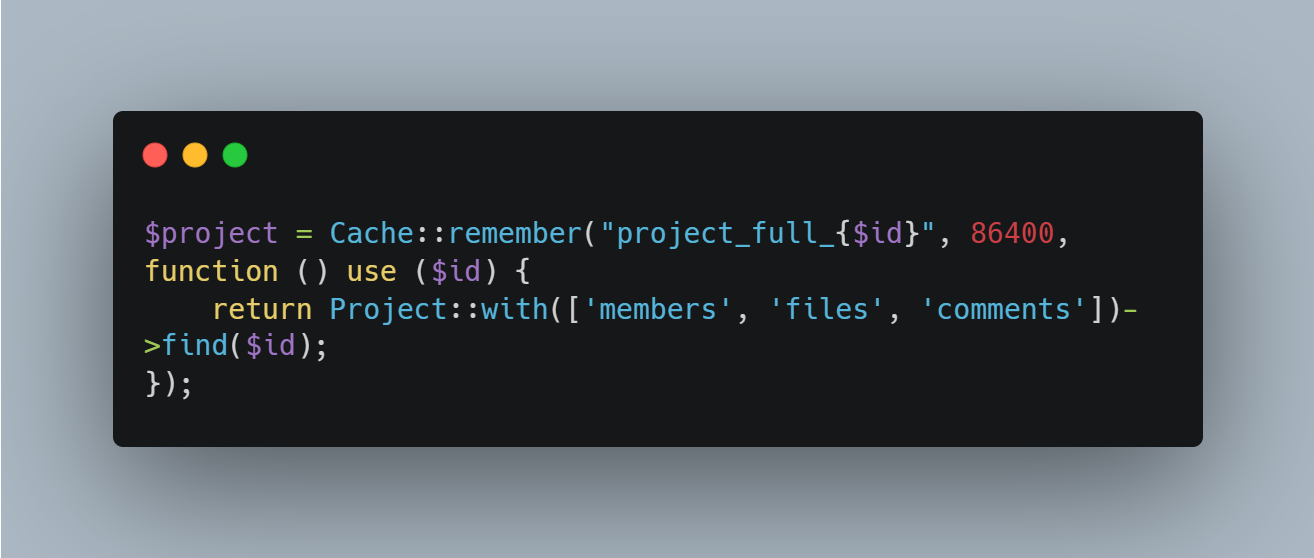
3. The "Cache Aside" Pattern and Invalidation
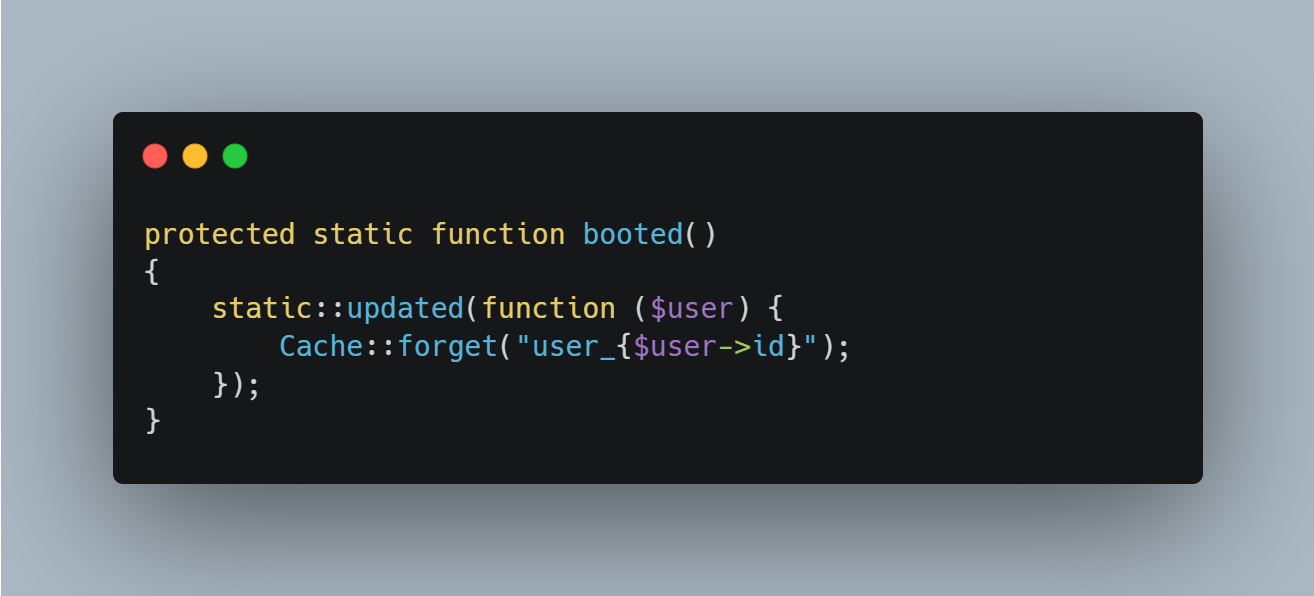
The biggest challenge in caching is invalidation. If you change a user’s name in the database, the cache must be cleared. In Laravel, this is best handled using Model Observers or Model Events.
Database Indexing: The Foundation of Performance
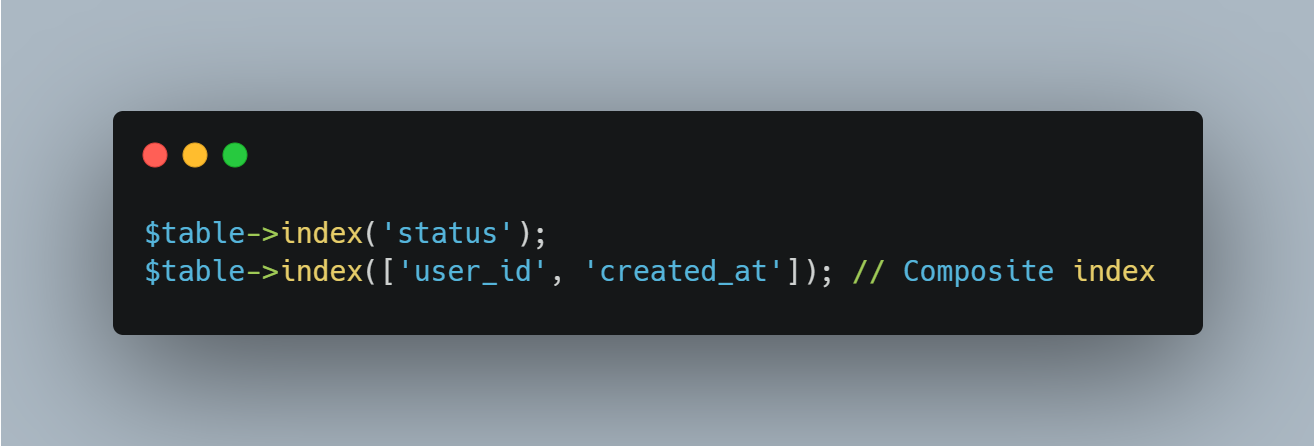
No amount of Laravel Eloquent optimization or caching can save a database that isn't indexed properly.
Enterprise applications often deal with "Big Data." When you run a query like Order::where('status', 'shipped')->get(), if the status column isn't indexed, the database must perform a "Full Table Scan." This means it reads every single row in the table to find the matches.
Pro-Tip: Always use Laravel Migrations to add indexes to columns used in where, orderBy, and join clauses.
Conclusion: Balancing Usability with Speed
Laravel Eloquent is a powerful tool that offers unparalleled usability. It allows your team to build features faster and maintain code more easily. However, in an enterprise context, you must be disciplined.
By mastering the use of Laravel Eloquent with eager loading, implementing robust caching layers, and ensuring your database is indexed, you can build applications that handle millions of users with ease. Remember, the goal of optimization isn't just to make the app "fast"—it's to make the app "scalable."
Final Checklist for your Laravel Enterprise App:
-
Is every relationship-heavy query using eager loading?
-
Are you caching "static" or "heavy" query results?
-
Do your models have automated cache invalidation logic?
-
Are your database columns properly indexed?
If the answer to these is yes, your Laravel application is ready for the big leagues

Written by
Mujtaba Hanif
Experienced PHP Developer with 6+ years of hands-on experience in building scalable, secure, and high-performance web applications. Specialized in Laravel development, custom PHP solutions, REST APIs, backend systems, and database architecture.
Currently working as a freelance developer, providing services in Python web scraping, automation, data extraction, and full-stack web development for international clients. Strong expertise in developing custom business solutions, affiliate systems, dashboards, e-commerce platforms, CRM systems, and API integrations.
Skilled in:
• PHP, Laravel, CodeIgniter
• Python Web Scraping & Automation
• MySQL & Database Design
• REST API Development & Integration
• JavaScript, jQuery, AJAX
• HTML5, CSS3, Tailwind CSS, Bootstrap
• Git & Server Deployment
Passionate about writing clean, maintainable code and delivering reliable solutions tailored to client requirements. Always focused on performance, scalability, and long-term project success.
Currently seeking new web development projects and long-term collaborations in the international market.